What the business is
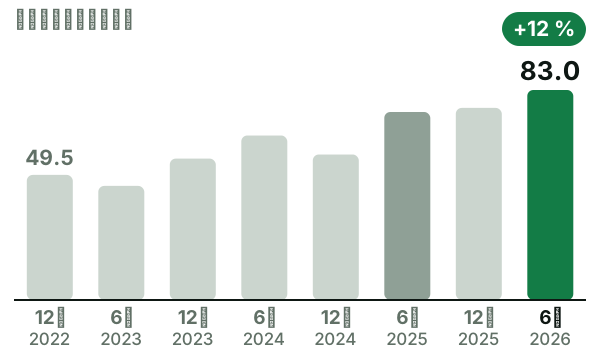
Hansoh discovers, makes and sells prescription medicines, led by cancer drugs, for patients through hospitals and pharmacies. It sells mainly in mainland China, where pharmaceutical product sales generated about 80% of revenue. By H1 2026, seven innovative medicines were generating sales in China, supported by more than 2,500 research staff. Money comes from product sales and licensing payments from partners.
- Product sales go to distributors that supply hospitals and pharmacies. Payment typically takes 60–180 days, so Hansoh can record a sale before collecting cash.
- Insurance expands access but cuts price: Ameile’s NRDL, China’s national public-insurance medicine list, price was RMB2,016.0 per box after a 42.7% reduction in March 2023.
- Licensing adds upfront cash, conditional milestones and royalties, payments tied to future medicine sales. The HS-10535 license to MSD brought a US$112 million upfront payment received in 2025.
The challenges
Oncology concentration. Cancer drugs generated 66.4% of 2025 revenue. A leading competing third-generation EGFR-TKI, a cancer medicine that blocks a growth signal used by some tumors, held 43.3% of the relevant Chinese market in 2024. Hansoh does not disclose Ameile’s individual sales, treatment volume or realized net price.
Clinical proof and pipeline conversion. Only 43.9% of oncology drugs entering Phase III, large patient studies that test benefits and risks before approval, later obtained approval in the cited benchmark. Ris-Rez met stated Phase III endpoints, but detailed evidence on benefit, safety and durability is needed to establish commercial value.
Reimbursement, price and hospital uptake. Negotiated medicines added to China’s 2024 NRDL received an average price reduction of 63%. NRDL inclusion does not ensure hospital formulary access, meaning approval for use in a hospital, or prescribing. Uptake must offset lower revenue per treatment.
Legacy cash and partnerships. Volume-based procurement, a national price-cut tender, cut prices by 53% on average in the latest national round in 2025. This pressures established products that help fund R&D.
The numbers
Hansoh’s real free cash flow margin rose across the five-year period and reached 41.4% in 2025. Hansoh’s real free cash flow per share reached RMB1.04, above diluted EPS of RMB0.93. RMB0.73 remained after dividends and buybacks; net cash rose across the five years shown.
How it earns, and what can hurt it (RMB millions)
What one share gets (RMB per share)
The verdict
The weighted forecast points to modest downside before recovery toward today’s price by October 2029, hinging on durable product growth and successful pipeline execution.
Management promises pivotal data, new drug applications “in due course,” higher R&D spending and broader hospital coverage, but gives no revenue or profit target. Ris-Rez’s Phase III osteosarcoma trial met its progression-free-survival endpoint, and Hansoh plans to discuss a China BLA, an application to approve a new medicine for sale, with the regulator. China accepted applications for olatorepatide and HS-10568; acceptance starts review, not sales approval.
The weighted value is HK$27.90 in October 2027. That implies a negative 11% return. It is HK$30.98 in October 2029. That implies a positive 2% return. The bear case has a 25% probability. The base case has a 55% probability. The bull case has a 20% probability. October 2029 outcomes span HK$12.94 to HK$61.30.
The bear case gains weight if oncology uptake slows, realized prices fall or regulatory delays defer launches while R&D spending stays high. Ris-Rez depends on regulator discussions and detailed evidence in China; GSK’s development outside China is another milestone. The EMA validated Aumseqa’s resubmitted application on October 7, 2026; validation restarts review but does not restore authorisation.
Hansoh’s value rests on durable oncology uptake, successful pipeline execution and cash generation that survives price pressure.