BASF dividend
MyStockButler's October 2026 analysis: BASF pays €2.25 per share. In 2025, it paid about €2.0 billion in dividends against €1.3 billion of free cash flow, so cash did not fully cover them.
How much does BASF pay its shareholders?
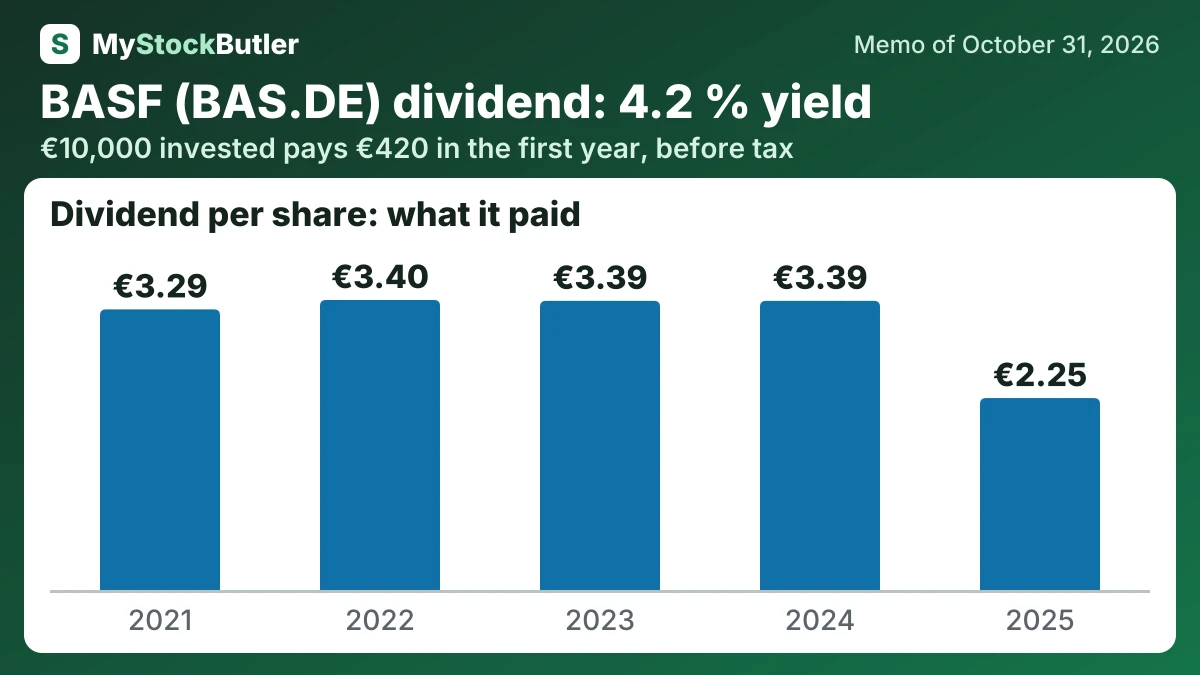
The base dividend stays at €2.25 per share because management has stated that level through 2027. The bear cuts it to €1.80 and then €1.50 as weak cash conversion persists. The bull raises it to €2.50 and then €2.75, still below the €3.40 paid before the 2024 reset.
| 2025 | 2024 | 2023 | 2022 | 2021 | |
|---|---|---|---|---|---|
| Net income from continuing operations | 1,455 | 1,154 | |||
| EPS, diluted | 1.63 | 1.29 | |||
| Dividend per share | 2.25 | 2.25 | 3.40 | 3.40 | 3.40 |
What this means. The 2024 figures were changed to exclude the Coatings business, so they compare with the business that continued rather than the original 2024 totals.
How much would BASF's dividend pay you?
€10,000 invested in BASF at its 4.2% dividend yield (our report of October 31, 2026) pays €420.00 in the first year, before tax. If its dividend per share keeps changing −9.1% a year, as it did from 2021 to 2025, and the dividends are reinvested, year 10 pays €232.20, with €3,230.97 received in all.
Before tax. Past dividend growth is not a promise. Information only, not investment advice.
Is BASF’s dividend covered by its cash?
Free cash flow is operating cash flow less spending on property, plants, and intangible assets. BASF reported €1.3 billion in 2025, up from €748 million in 2024, mainly because investment payments fell. These company-wide figures include Coatings as a discontinued operation, while the continuing operating-cash figures above exclude it, so the scopes must not be mixed.
BASF paid about €2.0 billion in dividends during 2025, more than that year’s free cash flow. The gap can come from reserves, borrowing, or proceeds from selling assets. BASF includes interest paid in operating cash flow, so it should not be deducted a second time.
| 2025 | 2024 | 2023 | 2022 | 2021 | |
|---|---|---|---|---|---|
| − Dividends paid | 2,008 | 3,035 | 3,035 | 3,072 | 3,031 |
| − Share buybacks | 355 | 0 | 70 | 1,325 | 0 |
| − Acquisitions | 1 | 202 | |||
| Cash and short-term investments | 2,759 | 2,981 | |||
| − Total debt | 21,088 | 21,762 | |||
| Paid to shareholders | 2,363 | 3,035 | 3,105 | 4,397 | 3,031 |
What this means. Net debt may look lower than all the company's debts because this calculation leaves out lease obligations and some cash-pooling loans.
What could change BASF’s dividend?
Management guides to 2026 EBITDA before special items of €7.40 billion to €7.80 billion and free cash flow of €1.50 billion to €2.30 billion. It has kept only 2 of 5 measured promises: emissions came below forecast in 4 years, and capital spending came below plan in all 5.
The bear path gains weight if low utilization near 70% persists, Zhanjiang fails to earn adequate margins, or working capital and transformation costs keep free cash flow weak.
What is BASF’s dividend yield against its price?
| Today (Oct 31, 2026) | |
|---|---|
| Share price | 53.46 |
| Market value (calculated) | 45,735 |
| P/E, next 12 months (calculated) | 17.9x |
| Price to book (calculated) | 1.2x |
| Dividend yield (calculated) | 4.2% |
What this means. The whole-business value is higher than the stock-market value because it includes debt and subtracts cash.